Yellowstone National Park is one incredible park to visit. It is located on top of a volcanic hot spot and surrounded by lots of great wildlife. The park is located mainly in Wyoming. However, the park does spread into parts of Montana and Idaho too.
We visited Yellowstone National Park, back in August 2012, as part of our 3-week road trip across parts of America. We visited, traveling from Arches National Park, to Glacier National Park, spending just one day in the National Park.
There is so much to see and do, in the National Park. We only had 1 day in the park. I felt as though we could have done with at least another day. However, if you only have 1 day spare, like ourselves, you can still see the main attractions that the park has to offer. So please, don’t let this put you off from visiting. If you are wanting to go off and do some of the hikes that the park has to offer, then definitely, more days are needed.
Top Things To See And Do
Here are my top things, which I did and recommend to you, to see and do, in just one day:
Upper Geyser Basin
The Upper Geyser Basin is famous for, Old Faithful Geyser. Old Faithful is the most famous geyser, in not just the National Park, but also one of the most famous geysers in the world. The cone geyser erupts around 20 times a day and is very impressive to watch. The best time to visit is in the morning. The area gets very busy in the afternoon, as coach tours turn up. To find information on the times of the eruptions, head to the visitor center first thing in the morning and then you can plan your day around the times. It also means you did not stand for ages, waiting for the Old Faithful to erupt.
While you are here, don’t forget to look out for the continental divide. Isa Lake, located near the Old faithful village, is the exacted location for the continental divide and where you find the signpost, for a photo. Not sure what the continental divide is? It is the divide between the 2 watersheds, of the 2 oceans: the Atlantic and the Pacific. Where you will have one river traveling east, towards the Atlantic Ocean and one river traveling west, to the Pacific Ocean.


Midway Geyser Basin
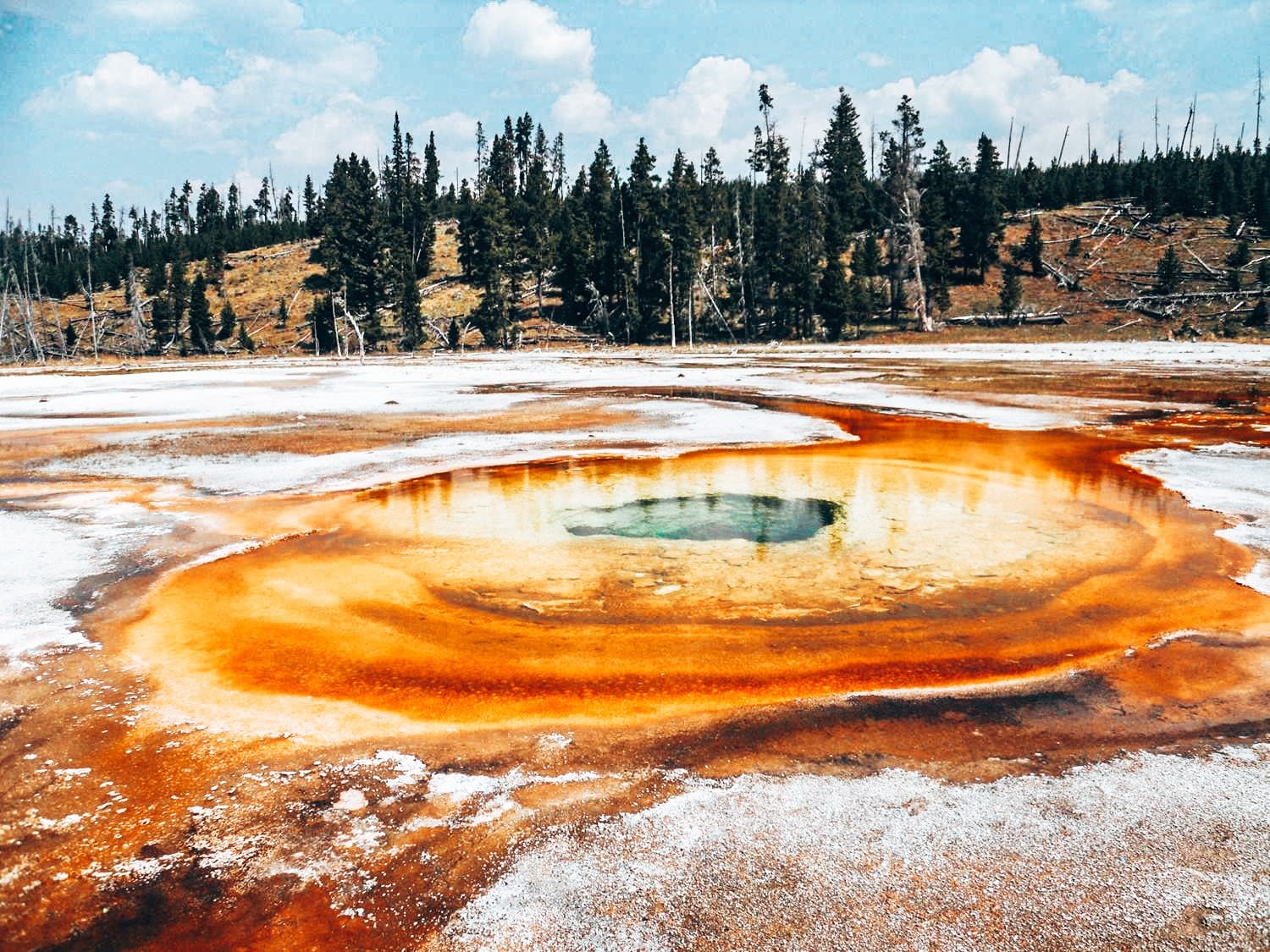
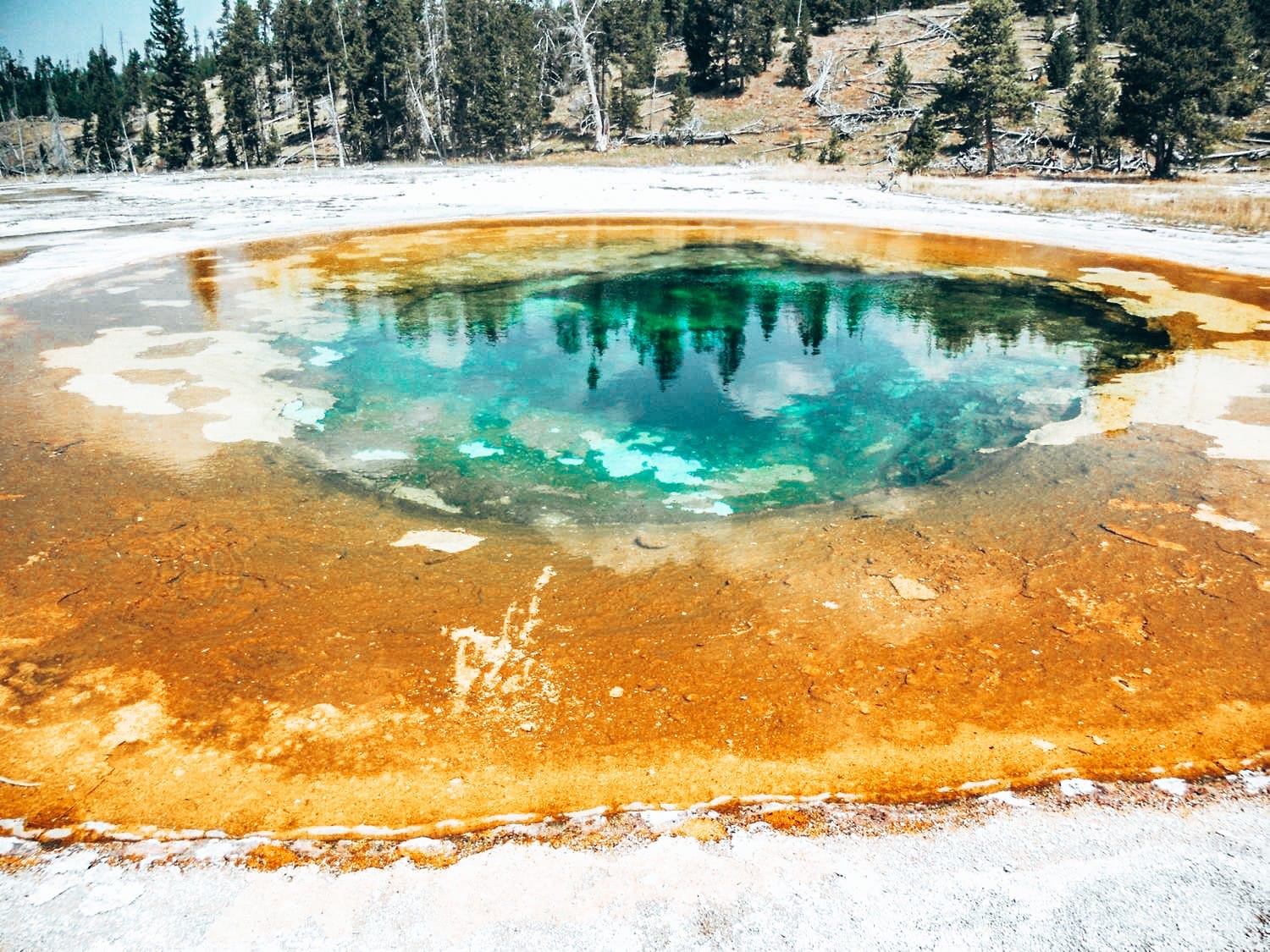
Located in the Midway Geyser Basin, is The Grand Prismatic Spring. The largest hot spring in the United States, and the third-largest in the world! It is truly impressive to see, all the different bright colours, caused by the different bacteria living in it. It is deeper than a 10-story building and bigger than a football field. Please, do not try and swim in it. Temperatures are as high as 70 °C!


As you walk over to Grand Prismatic Spring, following the path along the boardwalk, you will pass Excelsior Geyser, an enormous geyser crater, Turquoise Pool, and Opal Pool. They are all signposted, which is which, when you are there. They are all very impressive to see!


Yellowstone Lake
Yellowstone Lake, situated at 2,357 m above sea level, is the highest lake not just in the National Park, but also in the whole of North America. In the winter months, the lake completely freezes over. I would love to go back and see this. Swimming in Yellowstone Lake is not recommended. The water stays icy cold all year round, with temperatures reaching only as high as 5°C.
To visit Yellowstone Lake, my favourite spot is at West Thumb. Here, you will find the Small Geyser Basin, heading out onto the lake. Look out for the impressive, bright blue, Seismograph Pool.


Mammoth Hot Springs
Mammoth Hot Springs is another incredible sight to see, in the National Park. My photo below does not do justice at all! The hot springs run down limestone, giving this unique look. There is a lower and higher boardwalk to take. It is worth taking both if you have the time. By taking both, you will be able to see Mammoth Hot Springs at 2 different viewpoints.

Lower Geyser Basin
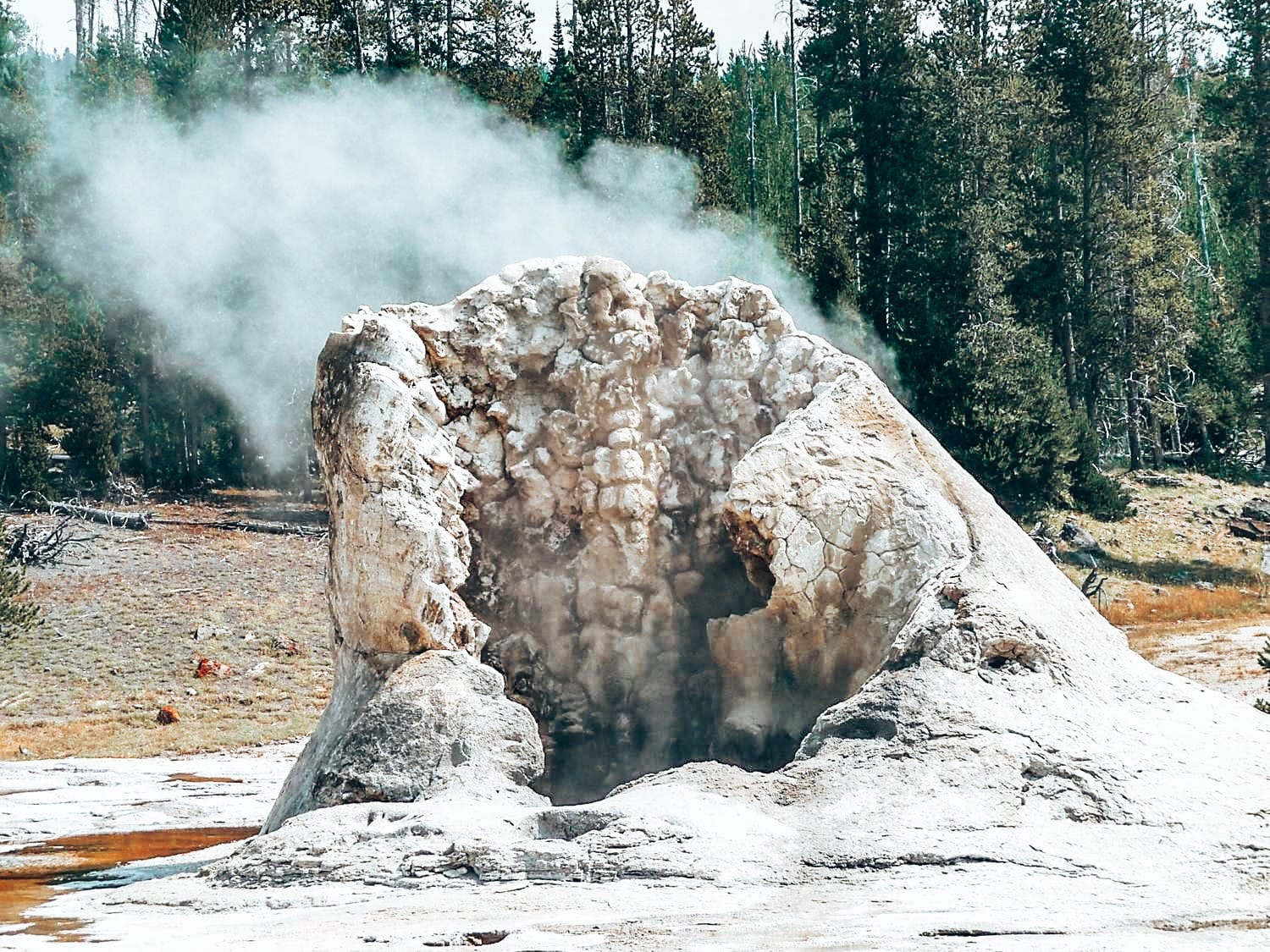
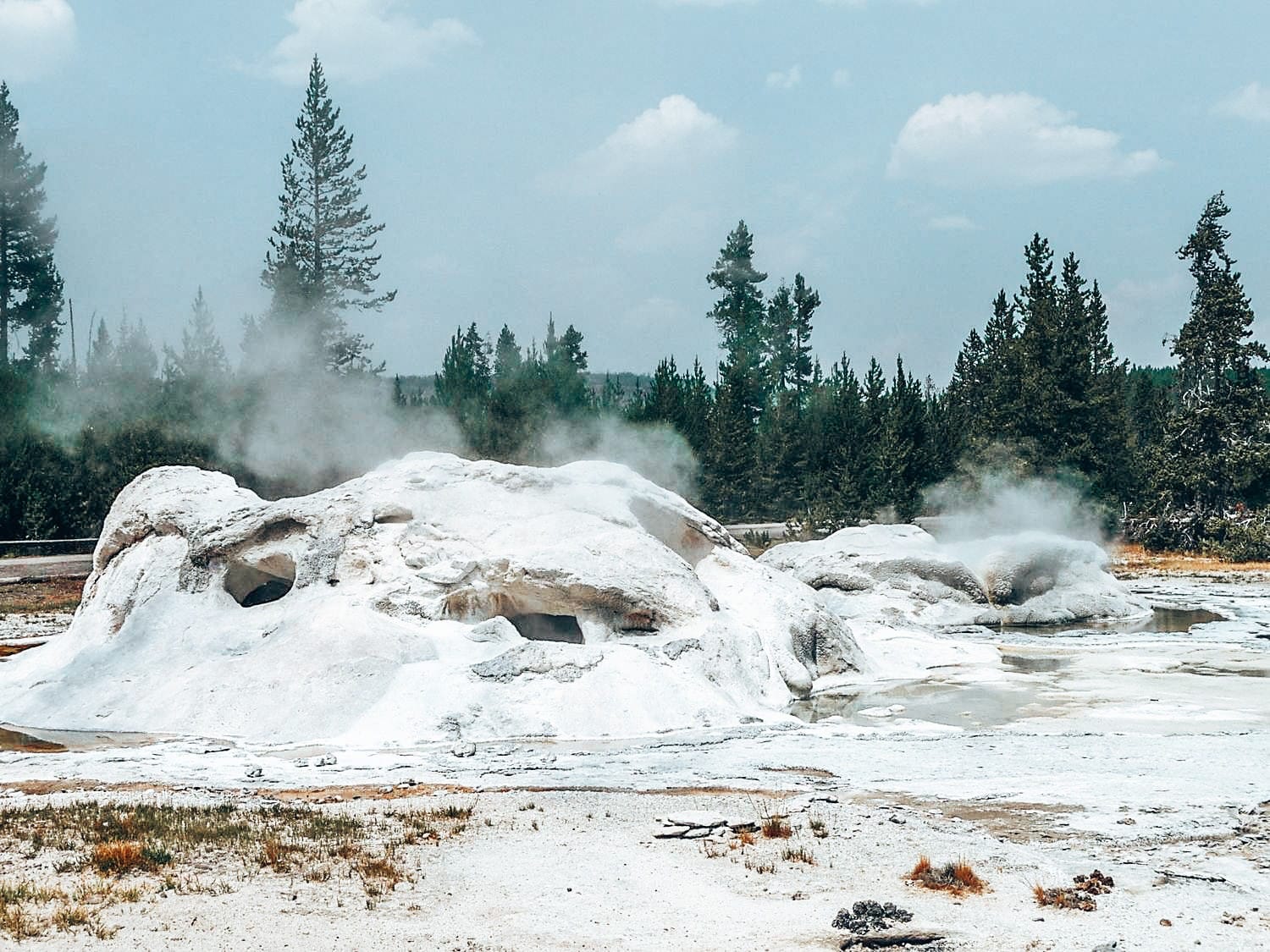
Lower Geyser Basin, also known as Fountain Paint Pot is the largest geyser basin, in the National Park. It covers a large area of 11 square miles. The area is full of regularly erupting geysers, hot springs, and mud pools. It is home to Great Fountain Geyser. The Great Fountain Geyser, is the only predicted geyser in the Lower Geyser Basin and the only predicted geyser in the park, which you can actually drive to. For the predictions of the Great Fountain Geyser, you need to head to the Old Faithful Visitor Centre, on the day of the visit.
To see Lower Geyser Basin at its best, take the Fountain Paint Pot Trail. It is only a short trail and should take you around 30 minutes to complete. The trail takes you past the hot springs, geysers, and mud pools. The car park is only small, therefore I recommend getting there early!


Norris Geyser Basin
Norris Geyser Basin is Yellowstone’s oldest and hottest thermal area. On your visit, you can choose from 2 different walking routes to do: Porcelain Basin and Back Basin. It is worth doing both if you have the time. The Porcelain Basin trail is 3/4 mile (1.2-km), in distance. The Back Basin trail is 1.5 miles (2.4 km), in distance. You will also get to see the famous Steamboat Geyser; the world’s tallest geyser! The geyser travels as high as 300–400 feet (91–122 m), from the ground.

Grand Canyon Of Yellowstone
The Grand Canyon of Yellowstone is a ‘must-see’, on your visit to Yellowstone. It was formed by a volcano, which erupted, 640,000 years ago. It is truly impressive to see! The best way and easiest way to see the canyon is via Uncle Tom’s Trail, located on the South Rim. From this trail, not only will you be able to see the stunning, 1,200-foot-deep canyon, but you will also see 2 waterfalls; Upper Falls, 109 feet long, and Lower Falls, 308 feet long.


Wildlife in Yellowstone
Yellowstone National Park is not just famous for the geysers, hot springs and mud pools, but also for all the wildlife which live there. Here are the 3 best spots to visit, for your chance of seeing some wildlife:
Blacktail Plateau Drive
Blacktail Plateau Drive is a one-way scenic drive, located north of the park, on a dirt road. The drive will take you around 20 – 30 minutes to complete, depending on how much you stop to take photos of wildlife or scenery. On a good day, you might be able to spot deer, elk, and even bears! Please note: RVs, buses, and trailers are not permitted on this road! Sadly, we could not do this drive, as we were in an RV.
Thorofare Valley
Thorofare Valley is located in the southeastern corner of the park. It is famous for its prime wildlife habitat and the wild Yellowstone River. If you are lucky, you may get to see grizzlies, moose, bald eagles, elk, and wolves. We did not visit here, as we did not have a lot of time. The valley is full of great hiking trails. It would be nice to return one day, to Yellowstone and have a go at completing some of these trails.
Hayden Valley
Hayden Valley is the central valley of Yellowstone. It is located between Yellowstone Falls and Yellowstone Lake, along the Yellowstone River. They say it is one of the best spots in the park to see bison, grizzlies, coyotes, wolves, moose, and osprey. I would say, if you want the highest chance of seeing some wildlife, this is the valley to head to! We saw large groups of Bison swimming across the lake, rolling around in the sand to cool off, and walking up to the cars on the road. It was fantastic to see!


If you would like to be notified when any new travel guides goes live, straight to your inbox, please subscribe here:
(don’t forget to check your junkbox for the confirmation e-mail!)
Further Reading
My book, How I Tamed the Wolf, Living with Lupus is available on Amazon via this link:
https://www.amazon.co.uk/dp/B09M73X2JQ/ref=cm_sw_em_r_mt_dp_MWAF58981F0VVMNRV1WN
Other travel guides you may like:
Red Rock Canyon – Calico Hills: Best Hike In Red Rock Canyon
Petrified Forest National Park – A Day In Petrified Forest National Park
Grand Canyon – A Guide To The Grand Canyon


