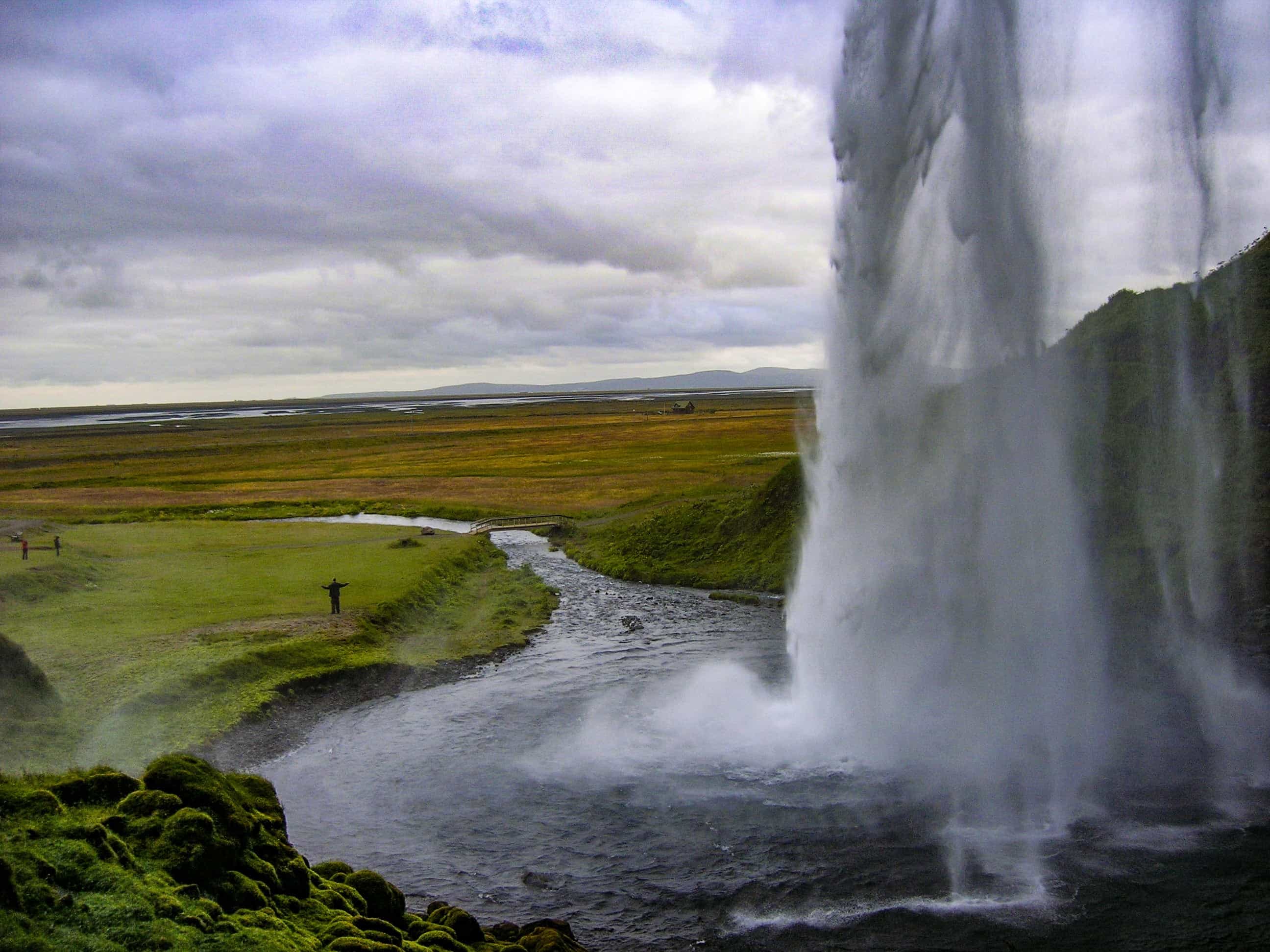
I’ve put together my favourite Icelandic waterfalls. Some are located on Route 1, the Icelandic ring road, and others are little off the beaten track.
Back in the summer of 2007, I spent 2 weeks touring around the whole Island with my family. We hired a car, brought our walking boots with us, and a tent to camp in each night. We had a fantastic 2 weeks. I loved Iceland, so much, I decided to revisit with my partner. We spent the end of 2018 and celebrated the beginning of 2019 on this beautiful Island. Unfortunately, we were only there for 5 days. Therefore, we only had time to revisit some of the waterfalls near Reykjavik. It was lovely to see some of them covered in snow.
Here is my list of the ‘must-see’ waterfalls in Iceland and the order I saw them in when completing the ring road anti-clockwise.
Gulfoss
Gullfoss is located just down the road from the Geysir Geothermal and is part of the famous Golden Circle route. It is located 116km outside of Reykjavik. It is one of Iceland’s biggest waterfalls and one my favourite too. Gullfoss translated into English means ‘golden falls’, a great name for it.
Gullfoss is located at the beginning of the Hvita Canyon, consisting of two giant cascades and is an impressive 32-metres deep. There is a trail that goes right around the waterfall, allowing you to see it from all different directions. Perfect for taking some good photography shots. It will take you around an hour to walk it. The first time I was in Iceland I walked a good part of the trail. The second time I visited, I still did not have time to walk the trail as it was getting dark when we arrived and the weather had turned. It was snowing and blowing an icy, cold wind. It was freezing! We enjoyed the waterfall at just one of the viewing spots. I regret not having more time to explore the waterfall in different directions, as is it one of the most impressive waterfalls I have ever visited. Maybe the third time I choose to visit, I may get the opportunity to walk the trail.
There are 2 car parks; an upper one and a lower one, both free of charge. The lower car park is right next to the main viewing platform. The upper car park next to the visitor centre with a shop, cafe, and toilets.


Hjalparfoss
Hjalparfoss is a beautiful waterfall located in the Thjorsa Valley, South of Iceland, 123km outside of Reykjavik. Surrounding the waterfall are ashes for the Mount Hekla volcanic eruption.

Gjarfoss
Gjarfoss is a little hidden off the beaten tracks. It’s a waterfall that tends to get missed by lots of tourists, yet it provides so much beauty, hidden away in the Gjain Gorge.
To reach Gjarfoss, you have to take a short, easy hike for the Viking settlement manor at a place called, Stong. The hike is 2.1km, taking you about an hour to complete, including plenty of stops for photos. It is worth walking a little bit further past the waterfall, along the path following the river. As you do, you will encounter some arches formed out of the basalt volcanic rock.


Seljalandsfoss
Seljalandsfoss is a 1-hour 45-minute car journey from Reykjavik, located just off the main ring road (route 1). It is one of Iceland’s most photographed waterfalls and one of their most popular waterfalls to visit. You can take a walk behind the 60-metre tall waterfall. Be careful, you may get splashed!
If you are traveling to the waterfall by car, there is a car park located at the waterfall. It will cost you around £5 for the day. If you do not have a car, there are excursions that take you to the waterfall.
I have been fortunate to visit the amazing waterfall in the summer months and in the winter months. The 2nd photo shows Seljalandsfoss with a dusting of snow on New Year’s Day.


Skogafoss
Skogafoss is one of Iceland’s biggest waterfalls. With a drop of 60-metres and a width of 25-metres, be prepared you may get wet as you stand up close to it! There is a steep path that takes you to the top of the waterfall. Both times I visited Skogafoss, I did not have time to do it.
Skogafoss is a 30-minute drive from Seljalandsfoss, a 2-hour 15-minute drive from Reykjavik and a 30-minute drive from Vik. It is located just off the main ring road (route 1) Car parking is free of charge. There is a visitor centre, toilets and picnic benches to sit and enjoy your lunch if the weather is warm enough.
The top photo is of Skogafoss in the winter, the bottom photo is Skogafoss in the summer.


Svartifoss
Svartifoss, located in Skaftafell in Vatnajokull National Park, is one of Iceland’s most incredible waterfalls. The name Svartifoss translates to ‘the black waterfall’. The waterfall is 20-metres high and surrounded by amazing hexagonal black basalt columns. It is pretty impressive and one of the only few places in Iceland to have the basalt columns.
To see this magnificent waterfall, we did a walk from the campsite at Skaftafell. You can just walk up to Svartifoss. However, we decided to make it into a full days walk. We walked up to the waterfall, then beyond to Skerholl where we could see great views of Morsarjokull Glacier. From there, we continued onto Skaftafellsjokull. It was a lovely 11-mile circular walk with great views. If you want to be challenged more, you can climb Kristnartindar. Unfortunately, we did not have time.


Photos from the walk, beyond the glacier:


Hafragilsfoss
Hafragilsfoss is a waterfall north from Dettifoss in the Vatnajökull National Park. The waterfall is 91-metres wide and with a drop of 27-metres, located in the impressive canyon Jökulsárgljúfur.
It is not easy to walk to from Dettifoss, the next waterfall on my list. Instead, I recommend driving to it. We visited it before visiting Dettifoss. The waterfall is located just off Road 864, which at the time we traveled back in 2007, it was a gravel road. In the winter months, this road is shut and the waterfall is not accessible by car. The road normally reopens early May but is worth checking before you travel.

Dettifoss
Dettifoss is located in Vatnajökull National Park, in the north of Iceland, 152 km east of Akureyri. It is Europe’s most powerful waterfall. It is known as ‘the beast’. It’s that powerful, it plunges a whopping 500 cubic meters of water per second! Dettifoss it 45-metres high and 100-metres wide.
The waterfall is located just off Road 864, which at the time we traveled back in 2007, it was a gravel road. In the winter months, this road is shut and the waterfall is not accessible by car. The road normally reopens early May but is worth checking before you travel.

Selfoss
Selfoss waterfall is in a completely different location to the town Selfoss, so make sure you don’t get the two mixed up. Selfoss, the waterfall is located near Dettifoss. They are that close to each other, we walked from one to the other. Selfoss is known as the Niagara of Europe. When you see it, you understand why! It is only 11-metres high but it is a whopping 100-metres wide. Stand too close, you will get wet!
Like Dettifoss, the waterfall is located just off Road 864, which at the time we traveled back in 2007, it was a gravel road. In the winter months, this road is shut and the waterfall is not accessible by car. The road normally reopens early May but is worth checking before you travel.

Godafoss
Godafoss, located in the North of Iceland, just a 30-minute drive east from Akureyri. The 12-metre high and 30-metre wide waterfall is accessible just off Road 1, the Icelandic ring road. Godafoss translates to, ‘the waterfall of the gods’ with its nickname as ‘the beauty’. It is a waterfall not to be missed!


There are still many more waterfalls to see in Iceland. As I revisit the country in the future, this list will keep on growing.


